

Tired of your air conditioner giving you a headache whenever you need a cool breeze?
From clogged filters to broken casing, there are many possible causes of those irritating sounds you’re experiencing.
Today we’re taking a look at some common AC noise complaints and what you might do to solve them.

Photo credit: giphy.com
Why is My AC So Loud?
Different Air Conditioner Noises. What do they mean? What causes them?
Diagnosing this problem is, at first, all about using your ears! Much as you want your AC to be quiet - pay attention and try to deduce what type of sound is coming from it.
There are three particularly unpleasant noises that people commonly report from their AC, which should all be taken seriously:
Buzzing
First things first, turn off your AC! A buzzing noise is often suggestive of an electrical problem, which can be dangerous and requires professional consultation. Your likely culprits are the relay switch or its wiring, the condenser fan motor, or another smaller component.
Whistling
Typically occurring when there is an obstruction blocking your AC’s airflow somewhere within the ductwork or return vents, a whistling noise means your air conditioner is working overtime. An AC trying its hardest to pull enough air through closed vent dampers, a dirty air filter, obstructions in front of the AC or ill-fitted ductwork/leakage could be the cause.
Grinding
Never a pleasant noise, if it sounds like there’s some serious internal friction happening, it’s possible that the belt on your AC’s blower fan has loosened.
Running free, it is now grinding against the fragile internal components.
It could also be that the AC compressor is worn out and need replacing - or that the whole unit is too old and tired to carry on.
Other potential causes for your noisy AC include:
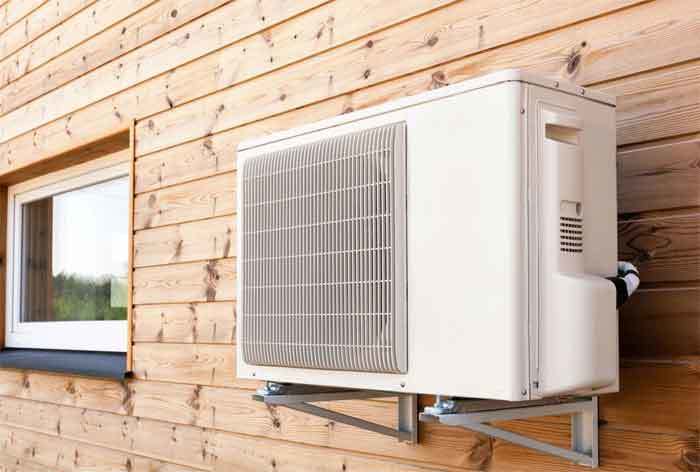
Photo credit: Aquietrefuge.com
How to Make an Air Conditioner Quiet
Provided that you aren’t experiencing any of the concerning noises above, those who simply appear to have a particularly noisy AC unit can try following this step-by-step guide to quieting things down.
Find the Best Place For Installation
When installing a brand new HVAC unit, it’s important to consider the most efficient place for it to be set up.
From the outset, it’s best to be as far from the AC as possible, as then you are less likely to be disturbed; it’s impossible to completely eradicate all noise, unfortunately.
That’s why installing your AC in a utility room works great if you have one! You will ideally want to avoid putting it in places where you spend a lot of time, like your bedroom, living and dining areas, or other communal spaces.
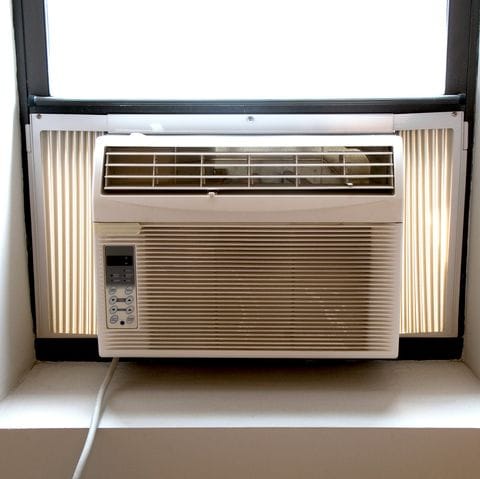
Photo credit: popularmechanics.com
Similarly, try and steer clear of narrow corridors and placing the unit close to other air ducts, as any noise produced by the AC when functioning will then bounce off of nearby walls and echo even louder!
The same goes for other solid surfaces in the vicinity, so try to avoid windows and doors where possible too. The surface beneath your AC should be smooth and even, as this will minimize any vibration created during active hours.
Asking your contractor to help you find the best place is always helpful.
Also make sure that when they install the unit, it isn’t set up to cycle on and off too often, as the constant disturbance of a repetitive cycle wears thin very quickly.
Cover With a Suitable Noise Absorption Blanket
Also referred to as a sound curtain or sound blanket, this impressive invention is designed to absorb some of the sounds generated by your AC.
Usually constructed of fiberglass and layered vinyl, it works as a barrier to dampen any unpleasant noises before they reach you, significantly reducing the decibels produced.
Not only is it great for that, but it also won’t interfere with the rate at which cool air is pushed through to your home, so don’t worry about any impact on the AC’s efficiency!
It’s even possible for a licensed contractor to install a blanket around the compressor of your unit specifically, which should significantly limit the amount of noise produced.
Establish a Noise Barrier - Preferably With Plants!
Much as the noise blanket serves to block out some of the sounds generated when an AC is running, you can also take steps to create an external barrier around the unit, being careful not to block any vents of course.
Not to go on a tangent, but humor us a second and think back to the last time you were out in nature - we’re talking forests, national parks, deep into some real wilderness.
Wasn’t it unnaturally quiet out there? Like, hear a pin drop quiet?
Foliage like trees and other large plants and vegetation serve as a natural barrier to the sounds of the city, however close they may be, creating a little pocket of quiet. Even an urban park can be a little bit of noiseless paradise!
We’re not advising that you start planting trees in your home, but by carefully positioning a range of mid-sized potted plants here and there, you can absorb some of the noise from your AC.
Plus, you’ll benefit from better air quality and some really attractive new decor to look at!
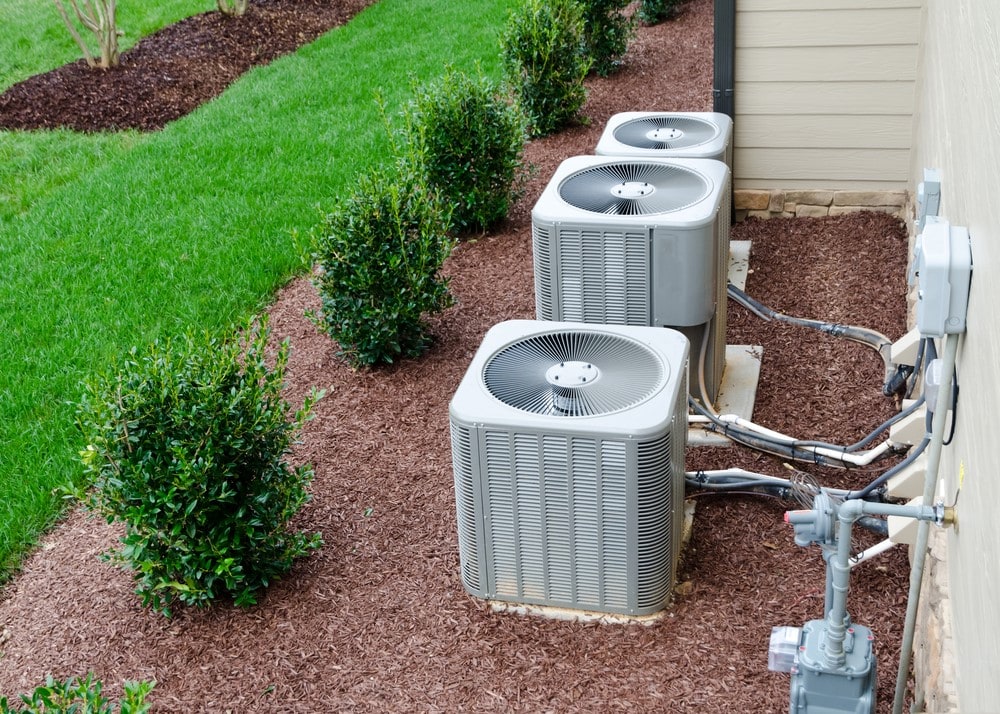
Photo credit: cogburnsheatingandair.com
Perform Regular Maintenance
Last but not least, this final step is more common sense than anything else. It’s very possible, as stated above, that a clogged air filter, blocked drains or other internal damage could be causing your annoying rattle.
That’s not the case for everyone, but it does remind us of why it’s necessary to keep on top of your AC and take care of it on a monthly basis.
Although you might be tempted to wait until a problem develops before tuning up or taking care of your AC, don’t wait. Regularly maintain the unit to avoid a breakdown!
Don’t worry, we’re only talking about a casual visual inspection here and there - you can leave the proper tune-up as an annual affair.
If you’re not familiar with disassembling and cleaning the unit, it’s recommended you hire an engineer to maintain it for you.
A qualified professional will clear out the drains, remove any debris and ensure a new filter is installed - plus, tidy up afterward!
Not only is this going to get rid of your pesky sound problem, but it will also ensure a longer lifespan for your AC altogether, keeping you cool during the long hot summer months for years to come.
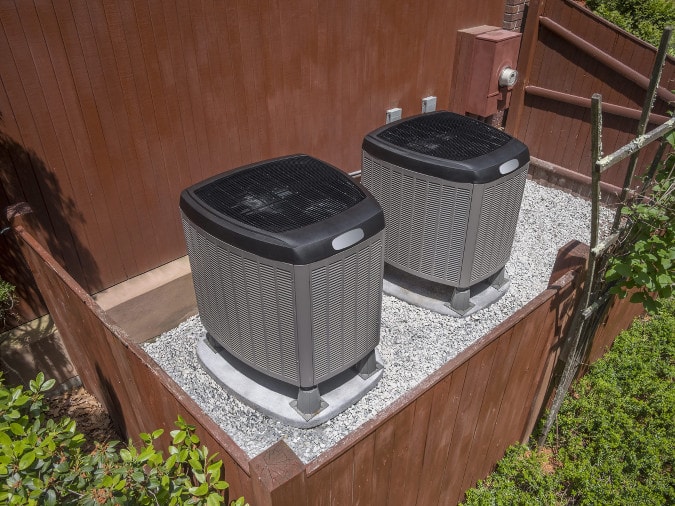
Photo credit: Pvhvac.com
How to Make an Outside Air Conditioner Quiet
As a large unit outside the home, connected to the ventilation system, keeping this bigger AC on the quiet side can prove difficult. Ways to reduce the noise produced by an outdoor air conditioner include:
- Installing a sound dampening blanket to serve as a barrier between the AC and your eardrums, minimizing noise from your compressor
- Ensuring the AC is installed properly and has been positioned on steady ground, as well as using foam as insulation to minimize vibrations
- Buy or construct a four-sided bamboo fence or use several plants to serve as natural fences that noise won’t bounce off of
- Check that there are no problems with the motor of the AC fan as issues with this component can cause a loud screeching noise
- Sometimes, when you have an older unit, the best solution is simply to replace your AC and upgrade to a newer, quieter model
How to Quiet an Indoor Air Conditioner
Though smaller and, usually, sleeker, window AC and portable AC units can also be pretty noisy at times too. The following steps might offer a solution to your headache-inducing problem:
- Ensure that the unit has been properly installed and that there are no obstructions to the drain port, as either could be causing water to collect and leading to a strange noise when the fans splash against it
Be sure to clear any debris away to resolve the issue
- Open up the unit and lubricate the fan’s motor, though bear in mind that this can be quite difficult to access without tools on certain models!
- Inspect the unit’s internal cavity and check there is no debris including leaves, dust, dead rodents (sorry), or other blockages
- If none of the above works, take off the AC’s cover and check for any damage to either the motorized fan (which sucks air in through the filter to be cooled by the evaporator coils) You should also check the fan that cools the condenser coils themselves, as a bent blade or debris build-up could be causing the unpleasant sound.
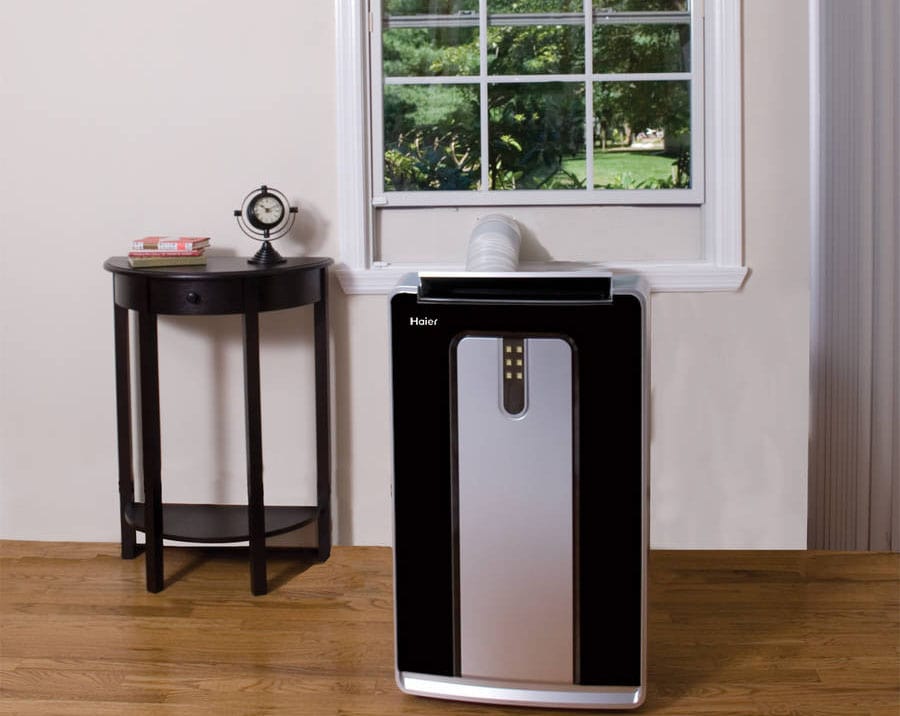
Photo credit: Climatastic.com
Conclusion
Now that you know what all of the strange noises your AC might make could mean, and are armed with plenty of solutions to resolve them, you’ll soon be free of those pesky and potentially dangerous problems!
With all of the information we’ve provided, you’ll be protected from any future issues, too!
People Also Ask
Although we have covered all of the important information above, there are a few specific topics you might like to have clarified further or made more clear.
The following are questions commonly asked by others having trouble with a noisy AC, and our concise answers should hopefully help you, too!
Is a Noisy Air Conditioner Dangerous?
Potentially, yes! Depending on the noise being produced, you might need to shut your AC off immediately and seek assistance before using it again.
A loud buzzing, popping, or vibrating noise is indicative of electrical issues, which can be very dangerous and should only be repaired by a certified HVAC engineer.
How Loud Should My AC Be?
Between 50 and 60 decibels, ideally. This is relatively quiet, save for an initial humming when initiating and shutting down.
That being said, an outdoor unit is always going to be louder when running, although this should be the same continuous hum and not an abnormal or high-pitched noise.
How Do I Soundproof My AC Unit?

Photo credit: ahs.com
As explained above, the easiest way to block out sound from your air conditioner is to create a natural barrier.
You should use materials that aren’t solid and won’t allow noise to bounce off. Suggested materials include four-sided bamboo, constructed into a fence of sorts, or some well-placed house plants!
Why is My AC So Loud Outside?
Placing your AC on uneven surfaces can cause vibrations it produces to be louder and more aggressive; this is fixed by repositioning or with a layer of foam.
Similarly, dirty air filters or debris clogging internal components are also responsible for loud outdoor AC units - a thorough clean is needed!
How Do I Reduce the Noise From My Neighbors Air Conditioner?
Besides asking them nicely to relocate an unfortunately placed unit, or using the same blockage methods above (well-placed plants and bamboo), there’s not a huge amount you can do here.
If it’s a bother at night, you might just need to buy a good pair of earplugs!